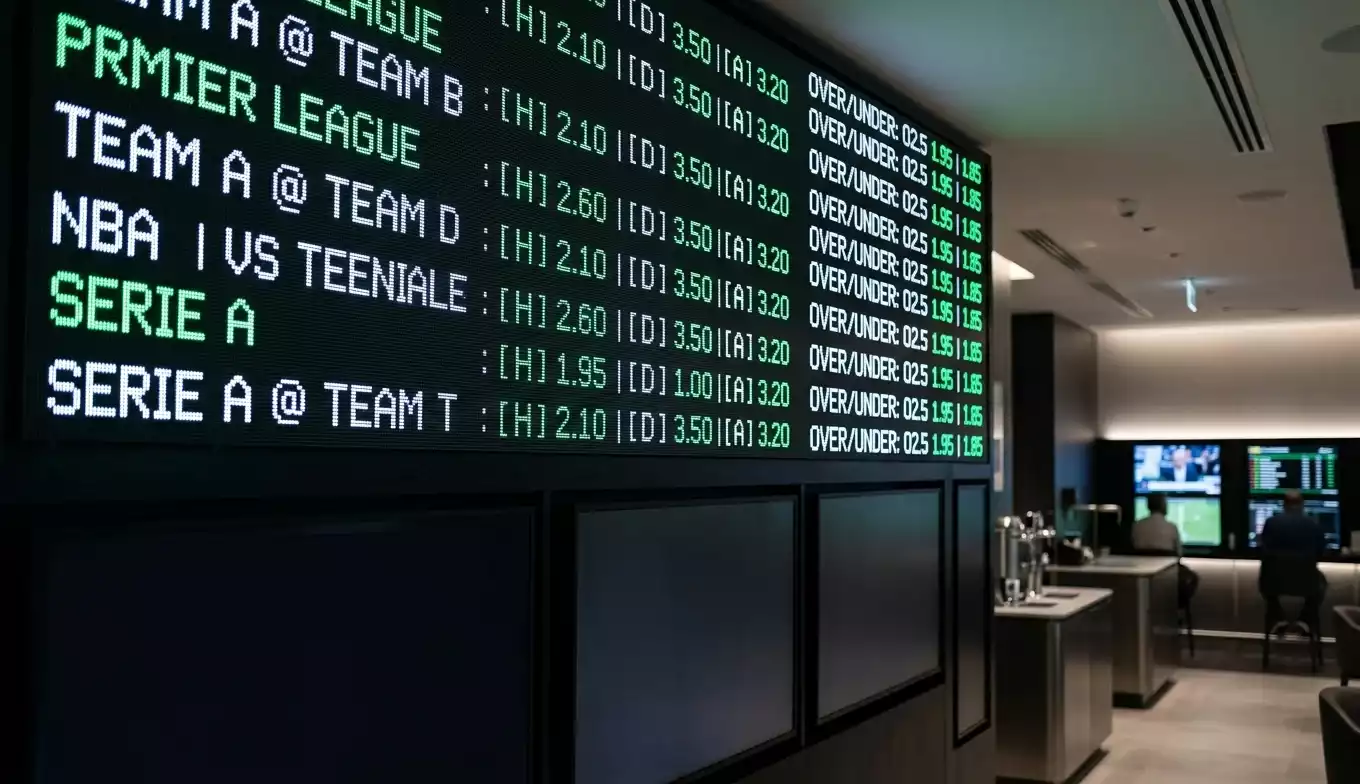
IBIA Suspicious Betting Alerts in 2025: What 300 Red Flags Tell Us About Sport Integrity
 Available in US
Three hundred. That is how many suspicious betting alerts the International Betting Integrity Association recorded across global sport in 2025 — a 29% jump from the 233 alerts logged the previous year. As someone who has spent nearly a decade tracking these numbers, I can tell you that the raw figure matters less than the trajectory. Every year for the past five, the count has risen. Every year, the monitoring net has widened. And every year, the alerts reveal the same uncomfortable truth: the sports betting industry is growing faster than the systems designed to keep it honest.
The IBIA’s annual data is the closest thing the betting world has to a global integrity barometer. It does not capture every suspicious bet — no system does — but it provides the most comprehensive cross-sport, cross-border snapshot available. For anyone trying to understand whether the NBA gambling scandal is an isolated crisis or part of a broader pattern, the 2025 report offers essential context.
300 Alerts, 29% Growth: The 2025 Headline Data
The 2025 alert total of 300 needs to be placed alongside the previous year’s outcomes to be properly understood. In 2024, the IBIA recorded 219 alerts. Of those, subsequent investigation confirmed that 54 matches were corrupted, and sanctions were imposed on 24 individuals. That means roughly one in four alerts ultimately pointed to genuine match-fixing — a conversion rate that demonstrates both the value and the limitations of algorithmic monitoring.
The 29% increase in 2025 admits two interpretations. The optimistic reading is that monitoring systems are getting better at detecting suspicious activity — casting a wider net and catching more anomalies that would previously have gone unnoticed. The pessimistic reading is that match-fixing is becoming more prevalent as global betting markets expand. The truth, as I have come to understand it over years of reviewing this data, is that both interpretations are partially correct. Systems are improving and manipulation is increasing. The question is which trend is moving faster.
What the data does not show is equally important. The IBIA monitors regulated, licensed betting markets. Manipulation through unlicensed offshore platforms, cryptocurrency betting sites, or informal betting networks does not appear in these figures. The true volume of suspicious activity almost certainly exceeds the reported number, though by how much is impossible to quantify with precision.
Football and Tennis Lead, but Basketball Is Rising
IBIA CEO Khalid Ali noted that the 2025 data “highlights a familiar integrity risk pattern, with football and tennis continuing to account for most suspicious betting activity.” Football led all sports with 110 alerts, accounting for 37% of the global total. Tennis followed at approximately 25%. These have been the two most integrity-challenged sports for years, driven by a combination of global market liquidity, the large number of events, and — in tennis — the financial vulnerability of lower-ranked players.
Basketball’s share of alerts has been smaller historically, but the trend line is concerning. The 2025 NBA scandal represents the most high-profile basketball integrity failure in the monitoring era, and it arrived at a moment when betting on NBA and international basketball markets has been growing rapidly. The sport’s characteristics — frequent scoring, individual player impact, numerous prop bet markets — make it structurally suited to the kinds of manipulation that generate alerts. As monitoring systems refine their basketball-specific algorithms, the number of basketball-related alerts is likely to increase, reflecting both better detection and growing market exposure.
The geographic distribution of alerts also tells a story. European football and South American football account for the largest clusters, but alerts from North American sports — including basketball, baseball, and hockey — have increased year on year since the legalisation wave that followed Murphy v. NCAA in 2018. The expansion of legal betting has not eliminated integrity risk; it has rebalanced it across a wider geographic and sporting landscape.
1.5 Million Matches, $300 Billion: IBIA’s Monitoring Scale
To appreciate what the alert figure represents, consider the scale of the system producing it. The IBIA monitors more than 1.5 million matches annually across 80-plus sports, covering regulated betting turnover exceeding $300 billion per year. Its member operators — which include many of the world’s largest licensed sportsbooks — share real-time data on betting patterns, market movements, and customer activity that feeds into the association’s detection algorithms.
The monitoring process works in layers. Individual sportsbooks maintain their own internal compliance teams that flag unusual activity on their platforms. When multiple operators independently flag the same event, or when the IBIA’s own aggregation algorithms detect correlated anomalies across platforms, an alert is generated. That alert is then shared with relevant sports governing bodies and, where appropriate, law enforcement agencies for investigation.
The system’s strength lies in its breadth — covering a vast number of events across multiple jurisdictions. Its weakness lies in depth. A single alert might represent a genuine match-fixing operation, a false positive triggered by coincidental betting patterns, or something in between. The investigation and adjudication process that follows an alert can take months or years, and the outcome depends heavily on the cooperation of sports federations and law enforcement agencies that may have different priorities, resources, and legal frameworks. You may also find Jontay Porter Lifetime Ban: The Betting Scheme That Foreshadowed the NBA’s Crisis interesting.
What IBIA Data Means for NBA Market Integrity
The IBIA’s 2025 report arrived in February 2026, four months after 34 people were arrested in the NBA gambling operation. The timing was coincidental — the report covers all sports globally, not the NBA specifically — but the juxtaposition was unavoidable. The NBA scandal demonstrated, in the most public way possible, that the alert-and-investigation model has gaps.
The Rozier case is instructive. The $263,000 spike in prop bets on a single game was detected by U.S. Integrity, a domestic monitoring firm, in real time. The alert was raised, but the investigation that followed took nearly two years to produce criminal charges. During that intervening period, additional games were allegedly manipulated, additional bets were placed, and additional participants were drawn into the scheme. The monitoring system worked in detecting the anomaly; the enforcement pipeline that followed was too slow to prevent further harm.
For the NBA, the IBIA data underscores a broader point: basketball is not immune to the integrity pressures that have plagued football and tennis for years. As NBA betting markets expand globally — particularly in Europe and Asia, where basketball is growing in popularity — the integrity surface expands with them. The 300 alerts recorded in 2025 are not a ceiling; they are a waypoint on a trajectory that will demand increasingly sophisticated monitoring, faster enforcement, and greater international cooperation. Learn more about nba player caught betting on our main page.
How many suspicious betting alerts did the IBIA record in 2025?
The International Betting Integrity Association recorded 300 suspicious betting alerts across all sports globally during 2025, representing a 29% increase from the 219 alerts logged in 2024. Football accounted for the largest share at 37% of alerts, followed by tennis at approximately 25%. The alerts covered events monitored across more than 80 sports with regulated betting turnover exceeding $300 billion annually.
Which sports have the highest number of integrity alerts globally?
Football (soccer) consistently generates the most suspicious betting alerts, with 110 alerts in 2025 representing 37% of the global total. Tennis is the second most-flagged sport at approximately 25% of alerts. Basketball’s share has historically been smaller but is increasing as betting markets on the sport expand. The geographic distribution is weighted toward European and South American football, though North American sports alerts have risen since the legalisation of sports betting in the United States.
Created by the ”nba Player Caught Betting” editorial team.