Terry Rozier Gambling Charges: How an NBA Guard Became a Federal Defendant
 Available in US
I have spent nine years tracking suspicious line movements on NBA player props, and in all that time, I never saw anything quite like the March 2023 Charlotte Hornets game. The alerts from U.S. Integrity came through in real time — $263,000 flooding into a single player’s prop markets, a volume so far above normal that it practically screamed insider knowledge. The player at the centre of that avalanche of money was Terry Rozier, a guard earning millions of dollars a year, whose name now sits atop one of the most consequential federal indictments in American sports history.
By October 2025, Rozier was among 34 people arrested across two FBI operations that exposed a web of insider betting, organised crime, and rigged poker stretching deep into professional basketball. The charges against him — wire fraud conspiracy — carry penalties that could reshape the rest of his life. But what makes Rozier’s case particularly instructive is not the scale of the alleged scheme. It is the mechanism: prop bets on individual player performance, fed by information that the betting public never had access to.
This is the full breakdown of the Terry Rozier case — how the scheme allegedly worked, what the federal indictment says, and what it all means for anyone placing money on NBA markets, particularly from the UK where bookmakers list hundreds of NBA player props every night of the season.
- From Boston Celtic to Charlotte Hornet: Rozier’s NBA Career Before the Charges
- The March 2023 Game: $263,000 in Suspicious Prop Bets
- Wire Fraud Conspiracy: What the Indictment Alleges
- Rozier’s Legal Strategy and Potential Outcomes
- Charlotte Hornets’ Response: Salary Arbitration and Roster Impact
- What Rozier’s Case Means for UK Bettors on NBA Markets
From Boston Celtic to Charlotte Hornet: Rozier’s NBA Career Before the Charges
Most people following this case know Rozier as a defendant. I think it is worth pausing on the player he was before the allegations, because the gap between his professional standing and his alleged conduct is central to understanding why this scandal cut so deep.
Terry Rozier was drafted 16th overall by the Boston Celtics in 2015. He was not a generational talent — he was a hard-nosed, competitive guard who earned his minutes through defensive energy and clutch shooting in the 2018 playoffs, when he stepped in for the injured Kyrie Irving and helped push Boston to the Eastern Conference Finals. That postseason performance transformed his market value. In 2019, the Charlotte Hornets signed him to a three-year, $56.7 million contract. A second extension followed in 2021, this time for four years and $97 million.
By the 2022-23 season, Rozier was one of the highest-paid guards in the NBA. The average NBA player salary sits at $11.9 million per season. Rozier was earning well above that figure — a point that federal prosecutors have implicitly used to undermine any financial desperation defence. This was not a fringe player scraping by on a two-way contract. This was a franchise cornerstone.
Rozier’s reputation in the locker room mattered too. Teammates and coaches described him as fiercely competitive, a player who hated losing above all else. That competitive instinct, prosecutors allege, did not stay on the court. It spilled into a parallel world of insider tips and six-figure wagers, facilitated by associates who understood how NBA prop markets moved — and how to move them.
The trade to the Miami Heat in February 2024 added another layer. By the time the indictment became public, Rozier was no longer in Charlotte. But the alleged conduct traced back to his Hornets tenure, and the franchise found itself entangled in a salary arbitration dispute that remains unresolved. A player’s career context does not excuse alleged crimes, but it explains why the fallout has been so wide — Rozier was not a peripheral figure. He was central to two organisations’ plans.
The March 2023 Game: $263,000 in Suspicious Prop Bets
I remember the first time an integrity analyst showed me what an “aberrational” betting spike looks like on a monitoring dashboard. It resembles a seismograph during an earthquake — a flat line for hours, then a sudden vertical leap that dwarfs everything around it. That is precisely what happened on 23 March 2023, and it happened on Terry Rozier’s player props.
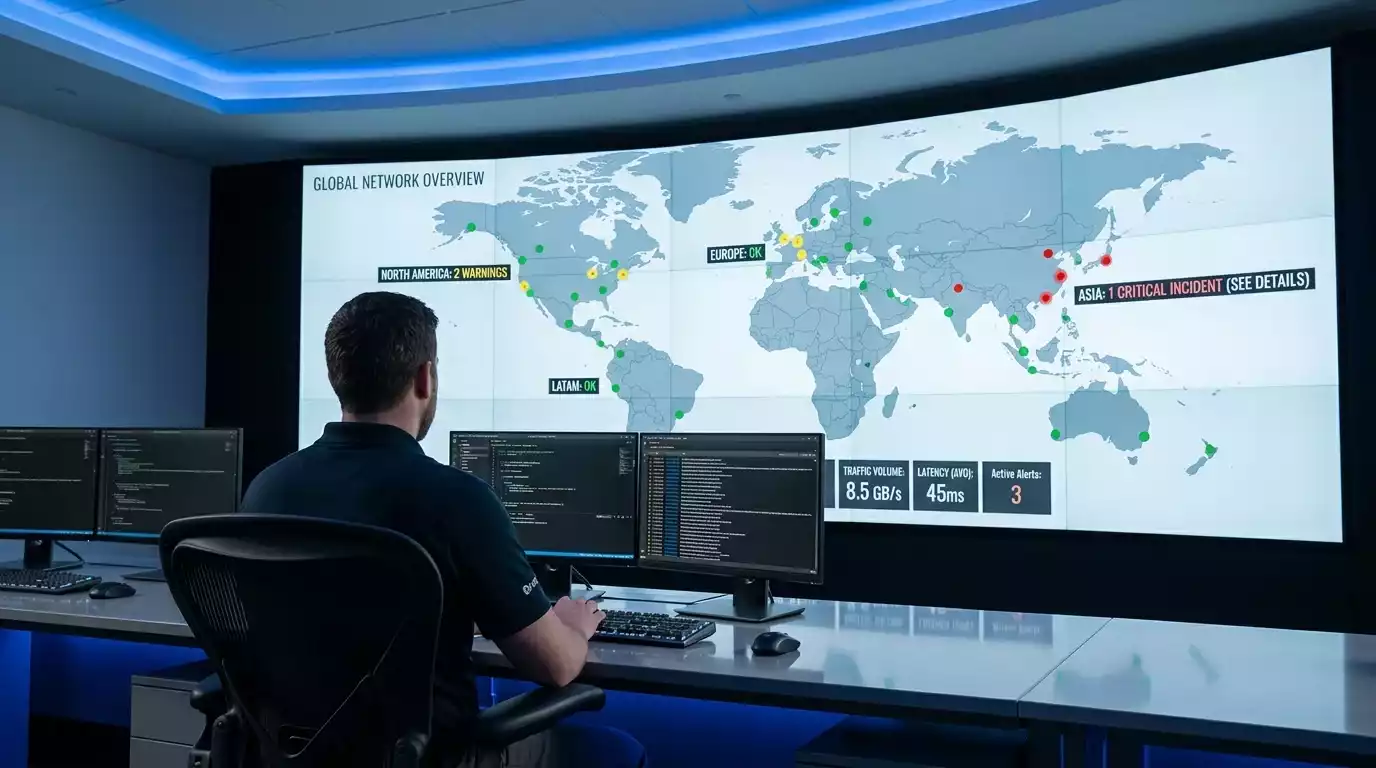
U.S. Integrity, the firm contracted by the NBA to monitor betting activity in real time, flagged $263,000 in wagers concentrated on Rozier’s individual performance markets for that single Charlotte Hornets game. To put that in perspective, prop bet handles on a mid-tier NBA guard in a regular-season game typically range from $20,000 to $60,000 across all major sportsbooks. A quarter of a million dollars landing on one player’s props in one game is not an anomaly. It is a siren.
The betting pattern was almost entirely on “unders” — wagers that Rozier would fall below his projected statistical lines for points, rebounds, and assists. This is the classic manipulation signature in player prop markets. Betting on a player to exceed expectations requires that player to have a standout game, which is inherently unpredictable. Betting on a player to underperform, however, can be influenced if someone with inside knowledge knows the player is carrying an undisclosed injury, plans to limit his minutes, or has agreed to reduce his effort. The information edge is asymmetric, and it only works in one direction.
What made the Rozier case distinctive was the coordination. According to the federal indictment, the bets were not placed by a single individual. They were distributed across multiple accounts and multiple sportsbooks, a technique known in the industry as “smurfing.” The intent, prosecutors allege, was to avoid triggering the automatic limits that legal bookmakers place on individual accounts. But the aggregate volume still tripped U.S. Integrity’s algorithms, because the system monitors market-wide flows rather than individual accounts.
An anonymous NBA player agent, speaking to NBC News after the arrests, offered a reaction that stuck with me: “Surprised they got caught. But not surprised, as this is happening everywhere.” That quote captures the dissonance at the heart of the case. The industry knew the vulnerability existed. The monitoring systems caught the signal. Yet the gap between detection and prosecution stretched more than two years — from March 2023 to October 2025 — during which the alleged scheme continued.
The $263,000 figure became the centrepiece of U.S. Integrity’s case file, which was handed to the FBI and ultimately folded into the larger investigation that became Operation Nothing But Bet. For anyone betting on NBA prop bet markets, that March 2023 game is a case study in what manipulated lines look like from the outside — and a reminder that the odds you see on your screen may not always reflect a fair market.
Wire Fraud Conspiracy: What the Indictment Alleges
Wire fraud is one of those legal instruments that sounds abstract until you see it applied to someone you have watched play basketball on a Wednesday night. The charge is built on a simple principle: if you use electronic communications — phone calls, text messages, internet transfers — to execute a scheme to defraud, you have committed a federal offence. In Rozier’s case, the indictment alleges that he passed nonpublic information about his own health status and intended playing effort to associates, who then used that information to place bets across state lines via online sportsbooks.
The federal indictment, filed in the Eastern District of New York, covers a period between December 2022 and March 2024. During that window, prosecutors allege that a group centred around several NBA figures placed insider bets on at least seven NBA games. Rozier’s alleged role was not as a bettor himself — unlike the Jontay Porter case, where the player directly wagered through a third party’s account. Instead, Rozier is accused of being the source: the person who provided the inside information that gave bettors an edge the public market could not match.
That distinction matters legally. Wire fraud conspiracy does not require the defendant to have personally placed a bet or personally received betting proceeds. It requires prosecutors to show that the defendant knowingly participated in a scheme that used interstate communications to defraud. The “victim” in this framing is not the sportsbook alone — it is every bettor on the other side of those prop bets, every person who wagered on Rozier’s “over” without knowing that insiders had reason to expect the “under” would hit.
The maximum penalty for a single count of wire fraud is 20 years in federal prison. Conspiracy charges typically carry similar maximums. In practice, first-time defendants in sports-related wire fraud cases rarely receive sentences near the statutory maximum. Federal sentencing guidelines consider factors like the defendant’s criminal history, the financial harm caused, and their level of cooperation. But even a sentence of two to five years would end an NBA career permanently and carry collateral consequences — immigration restrictions, loss of endorsements, potential civil liability — that extend far beyond the prison term itself.
The indictment also names several co-conspirators, some of whom have ties to networks investigated in the parallel Operation Royal Flush, which targeted organised crime’s infiltration of NBA-adjacent gambling circles. Rozier’s defence team has indicated they intend to challenge the government’s characterisation of his involvement, arguing that the evidence of information-passing is circumstantial rather than direct. Whether that argument holds will depend on the quality of the FBI’s electronic surveillance — wiretaps, phone records, and financial transaction data that formed the backbone of the investigation.
For those of us who track injury report manipulation as a professional concern, the Rozier indictment formalises something we have long suspected: nonpublic health information is the most valuable commodity in NBA betting markets. The indictment treats it as such — not as gossip or insider chatter, but as the raw material of a federal fraud scheme.
Rozier’s Legal Strategy and Potential Outcomes
If you have ever watched a defence attorney navigate a high-profile sports case, you know the first move is always distance. Distance the client from the co-conspirators. Distance the alleged conduct from the statutory definition of fraud. Distance the person in the courtroom from the image the public has already constructed. Rozier’s legal team has been executing that playbook since the day after his arrest.
The core of Rozier’s anticipated defence rests on the nature of the evidence linking him to the betting activity. Prosecutors have electronic communications — text messages, phone records, financial transfers — but the defence has signalled that much of this evidence is circumstantial. Proving that Rozier communicated with individuals who subsequently placed bets is not the same as proving that Rozier intended those communications to facilitate fraud. The gap between “telling a friend about a sore knee” and “providing insider information to a betting syndicate” is where defence attorneys will fight hardest.
There is also the question of whether Rozier personally benefited financially. In the Porter case, the financial trail was relatively clear — Porter wagered through a third party’s account and received a portion of the winnings. In Rozier’s case, the indictment is less specific about direct financial benefit to the player himself. If prosecutors cannot demonstrate a clear quid pro quo — money, favours, or other tangible compensation flowing back to Rozier in exchange for information — the conspiracy charge becomes harder to sustain at trial.
The Damon Jones plea deal, announced in early 2026, has shifted the strategic landscape. Jones became the first defendant in the NBA betting case to plead guilty, and as a cooperating witness, he may provide testimony that strengthens the government’s case against remaining defendants including Rozier. Defence attorneys in multi-defendant federal cases always fear the cooperator — the person who trades their own exposure for detailed, first-hand testimony against former associates. If Jones can place Rozier in specific conversations about specific games, the circumstantial evidence hardens considerably.
Rozier’s legal team may also pursue procedural challenges. Questions about the scope of FBI surveillance, whether warrants were properly obtained, and whether certain evidence should be suppressed are standard in federal conspiracy cases. These challenges rarely result in full dismissal, but they can narrow the evidence available at trial and improve the defendant’s negotiating position for a plea agreement.
The most likely outcome, based on patterns I have observed in comparable federal sports cases, is a negotiated plea to a reduced charge. Full trials in wire fraud conspiracy cases are expensive, unpredictable, and carry sentencing risks that defendants usually prefer to avoid. The question is not whether Rozier will negotiate, but what he can offer — and what he is willing to give up — to minimise his exposure.
Charlotte Hornets’ Response: Salary Arbitration and Roster Impact
Franchises do not like surprises. They especially do not like surprises that arrive in the form of FBI press conferences naming their former star guard as a federal defendant. The Charlotte Hornets’ response to the Rozier situation has been a masterclass in corporate damage control — swift public statements condemning gambling violations, followed by aggressive behind-the-scenes manoeuvring to recoup financial losses.
The salary arbitration dispute is the most tangible consequence for the organisation. Rozier was traded to the Miami Heat in February 2024 as part of a deal involving Kyle Lowry, and the Hornets’ remaining financial exposure depends on whether any portion of his Charlotte-era salary can be clawed back under the terms of the NBA’s collective bargaining agreement. The CBA includes provisions allowing teams to void or seek restitution on contracts when players are found to have violated league rules in ways that materially affect the team’s investment. With average NBA franchise values now sitting at $5.51 billion, teams are fiercely protective of the financial integrity of their contracts.
The roster impact extends beyond Rozier himself. Charlotte built its backcourt rotation around Rozier for four seasons. His departure was already disruptive; the cloud of a federal indictment over that period retroactively raises questions about games played during the alleged scheme. Were Rozier’s performances during the December 2022 to March 2024 window affected by his alleged involvement? Were there games where his statistical output was artificially suppressed? The Hornets’ front office has not addressed these questions publicly, but rival executives have noted privately that the scandal complicates Charlotte’s attempts to attract free agents who might be wary of an organisation associated with federal investigations.
For the Heat, the calculus is different. They acquired Rozier after most of the alleged conduct took place, and they moved quickly to place him on administrative leave once the charges were announced. Miami’s exposure is primarily reputational rather than financial, though the franchise faces its own questions about the due diligence process that preceded the trade.
The broader lesson for NBA front offices is that integrity risk is now a standard component of player evaluation. Before the 2025 arrests, teams assessed injury history, character concerns, and salary fit. Now, gambling exposure has joined that list — and the franchises that fail to account for it are the ones most likely to find themselves issuing damage-control statements of their own. You may also find UK Gambling Regulation and NBA Betting: How British Rules Apply to American Scandals interesting.
What Rozier’s Case Means for UK Bettors on NBA Markets
Every night during the NBA season, UK bookmakers list player prop markets on dozens of games. You can bet on how many points Terry Rozier will score, how many assists he will dish, whether he will go over or under on rebounds. These markets are priced based on statistical models, recent performance trends, and publicly available injury information. What the Rozier case makes painfully clear is that a subset of bettors in the United States were operating with information those models could not account for.
The scale of the American sports betting market puts the vulnerability in context. In 2025, Americans legally wagered $166.94 billion on sports — an 11% increase over the previous year. NBA prop bets represent a growing share of that volume, and the liquidity in US markets directly influences the odds that UK bookmakers set. When a major US sportsbook adjusts its Rozier “unders” line in response to suspicious volume, that adjustment ripples outward to every bookmaker offering the same market, including those regulated by the UK Gambling Commission.
For British punters, the practical implication is straightforward: the integrity of the odds you see on your screen depends on the integrity of the information flowing into the market on the other side of the Atlantic. If insiders are moving lines before public information catches up, UK bettors are trading against an invisible edge. You are not just betting on basketball. You are betting on whether the information environment is clean — and the Rozier case proves that, at least some of the time, it was not.
The UK’s regulatory framework offers some protections that the fragmented US system does not. The Gambling Commission and its Sports Betting Intelligence Unit monitor markets centrally, and British bookmakers are required to report suspicious activity under licence conditions. But those protections are designed primarily for domestic sports. NBA games are played in the United States, governed by American leagues, and monitored by American integrity firms. The UK regulator’s reach into NBA locker rooms is, for all practical purposes, zero.
What UK bettors can do is adjust their approach to NBA player props. Treat them as higher-risk markets. Be sceptical of late line movements on individual player statistics, particularly on “unders.” Pay attention to injury report timing — the NBA now requires updates every 15 minutes on game days, but the window between a player feeling a twinge and that information reaching the public report remains a vulnerability that no rule change has fully closed. The Rozier case is not a reason to abandon NBA betting. It is a reason to bet with your eyes open. Learn more about nba player caught betting on our main page.
How much money was bet on Rozier’s props in the March 2023 game?
U.S. Integrity flagged $263,000 in wagers concentrated on Terry Rozier’s individual player performance markets for a single Charlotte Hornets game on 23 March 2023. The vast majority of those bets were placed on ‘unders’ — wagers that Rozier would fall below his projected statistical lines. That volume was roughly four to five times the typical prop bet handle for a mid-tier NBA guard in a regular-season game.
What penalties does Terry Rozier face if convicted of wire fraud?
Wire fraud conspiracy carries a maximum penalty of 20 years in federal prison per count. In practice, first-time defendants in sports-related wire fraud cases typically receive sentences well below the statutory maximum. Federal sentencing guidelines take into account factors including criminal history, financial harm caused, and cooperation with prosecutors. A negotiated plea deal to a reduced charge remains the most likely outcome based on comparable federal cases.
Is Terry Rozier still under contract with the Charlotte Hornets?
No. Rozier was traded to the Miami Heat in February 2024 as part of a deal involving Kyle Lowry. However, the Charlotte Hornets are pursuing salary arbitration related to his time with the franchise, seeking to recoup a portion of his compensation under the NBA’s collective bargaining agreement provisions that allow teams to void or recover salary when players violate league rules.
How did U.S. Integrity detect the suspicious bets on Rozier’s performance?
U.S. Integrity monitors betting activity across major sportsbooks in real time, tracking aggregate volume and line movements rather than individual accounts. When $263,000 flooded into Rozier’s prop markets for a single game — far above the normal handle for those markets — the system flagged the activity as aberrational. The alert was passed to the NBA and subsequently to the FBI, where it became part of the larger investigation that led to Operation Nothing But Bet.
Created by the ”nba Player Caught Betting” editorial team.