
Live Betting and NBA Integrity Risks: The Vulnerability of In-Play Markets
 Available in US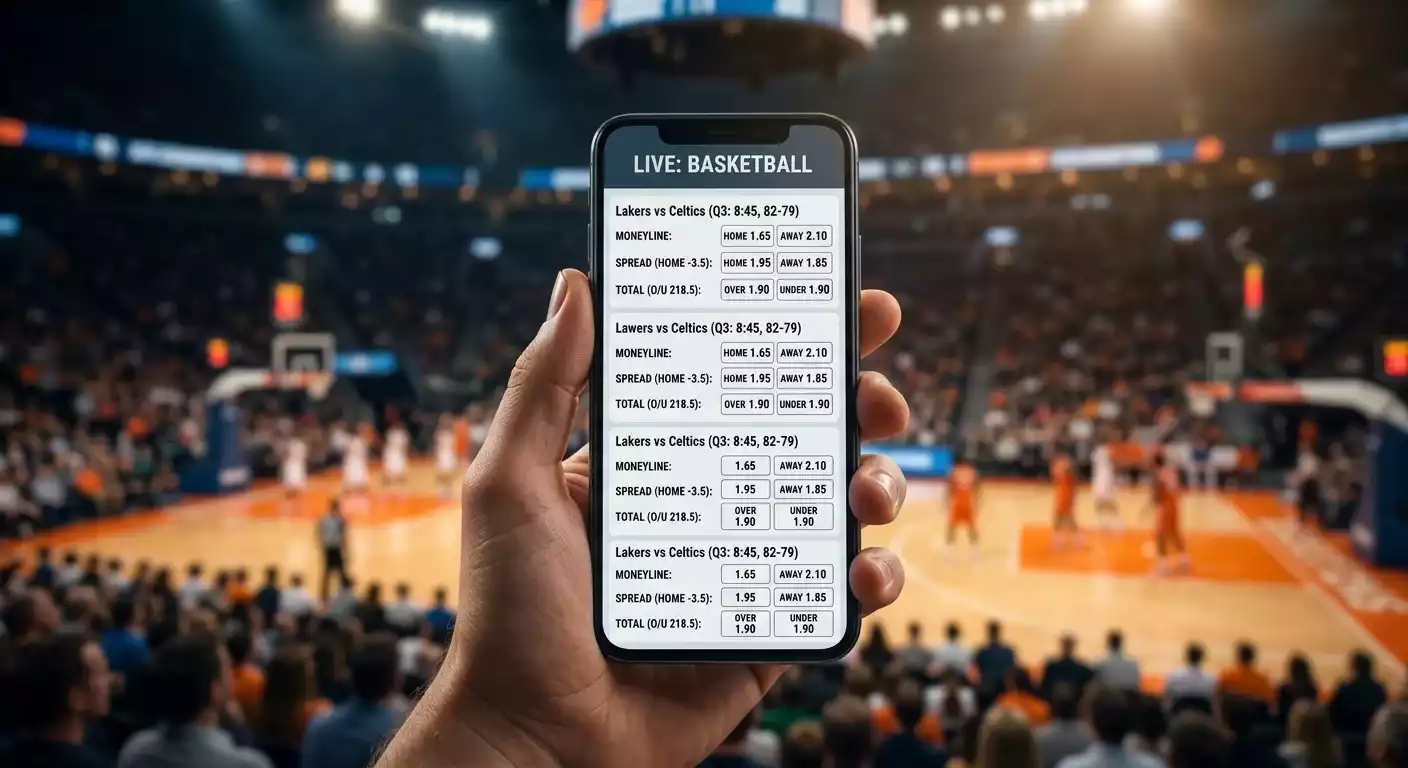
Picture this: an NBA game is in the third quarter, and a player who was listed as probable on the injury report walks gingerly to the bench after a routine play. Within seconds, the live betting markets adjust — his player prop lines shift, the game spread moves, and thousands of in-play wagers are recalculated. For most bettors, this is routine. For someone who knew ten minutes earlier that the player was nursing a tweaked hamstring, it is a window of pure profit. That window is measured in seconds, and it is the single greatest vulnerability in modern sports betting.
In-play betting accounted for 62.35% of the online sports wagering market in the United States during 2025. That is not a niche product — it is the dominant way Americans bet on sport. And yet, the integrity infrastructure designed to monitor these markets was built for a pre-match world where bettors placed wagers hours before tip-off. The 2025 NBA scandal exposed just how wide the gap has grown between the speed of live markets and the systems meant to police them.
62% of Wagers: The Scale of In-Play Betting
The sheer scale of live betting deserves a moment of consideration. When Americans legally wagered $166.94 billion on sports in 2025, nearly two-thirds of the online portion moved through in-play markets. That means bets placed after a game starts — on the next point scorer, the next quarter total, the next turnover, the running game spread — now represent the financial centre of gravity in American sports wagering.
For the NBA specifically, in-play betting has become the default mode. Basketball’s structure lends itself perfectly to live markets: frequent scoring, natural breaks in play, quarter-by-quarter totals, and a pace that generates constant data points for odds calculation. A single NBA game can produce hundreds of distinct in-play betting opportunities, from who scores the next basket to whether the current quarter total goes over or under a specified number.
This volume creates both commercial opportunity and integrity risk. Sportsbooks love in-play betting because it drives engagement and revenue — bettors who might place one pre-match wager will often place five or ten during a game, each generating margin for the operator. But every additional market is also an additional surface for potential manipulation. When you multiply hundreds of in-play markets by 1,230 regular-season NBA games, the monitoring challenge becomes staggering. The systems that flag suspicious activity need to process millions of data points in real time, distinguishing genuine market movements from those driven by inside information.
Why Speed Creates Manipulation Opportunities
The fundamental integrity problem with live betting is temporal. In pre-match markets, odds are set hours or days before an event. Information about injuries, lineup changes, and team strategies gradually becomes public, and the market has time to absorb it. If a bettor places a large wager based on nonpublic information the night before a game, monitoring systems have hours to detect the anomaly, investigate, and potentially void the bet before the event begins.
Live markets compress that timeline to near zero. The International Betting Integrity Association recorded 300 suspicious alerts across all sports in 2025 — a 29% increase from the previous year. But that figure reflects only the alerts that monitoring systems caught. In-play manipulation is inherently harder to detect because the information advantage is fleeting. A player who knows he will sit out the fourth quarter has perhaps five to ten minutes of usable information. A tipster who relays that information to a betting associate needs only the time it takes to send a text. The bet is placed, the outcome occurs, and the entire cycle from inside knowledge to payout can be measured in minutes.
This speed also creates a detection paradox. The faster markets move, the more legitimate large swings in betting activity there are. A player turning an ankle in the third quarter will naturally trigger a wave of bets on the under for his remaining stats. Distinguishing that legitimate wave from a coordinated manipulation attempt requires algorithms that can process context — not just volume — in real time. Current systems are improving, but they were designed for a market that operates at a fundamentally different tempo than the one that prop bet manipulation exploits.
Monitoring Live Markets: Harder, Faster, Less Data
The IBIA monitors more than 1.5 million matches across 80-plus sports, covering betting turnover exceeding $300 billion annually. That monitoring infrastructure is impressive, but it faces structural limitations when applied to live NBA markets. Pre-match monitoring relies on established baselines: a typical NBA game attracts a predictable volume of betting, and significant deviations from that baseline trigger alerts. Live markets are inherently volatile — betting volumes spike and contract constantly in response to on-court events, making baseline comparisons far less reliable.
There is also a data gap. Pre-match markets benefit from hours of information accumulation: injury reports, travel schedules, rest patterns, historical matchup data. Live markets must rely on real-time data feeds from the game itself, combined with whatever pre-match intelligence was already priced in. When a monitoring system flags a suspicious in-play bet, the investigator reviewing that alert has less context to work with than their pre-match counterpart. Was the sudden surge of under bets on a player’s points driven by inside knowledge, or did the bettor simply notice the player grimacing after a hard landing?
The practical result is that in-play manipulation operates in a grey zone where plausible deniability is easy to construct. A defence attorney can always argue that a bettor was watching the game and reacting to publicly visible information. Proving that the bet was placed before visible cues appeared on the broadcast — a matter of seconds in most cases — requires forensic-level timestamp analysis across multiple systems. It is possible, but far more resource-intensive than pre-match investigations. Read our detailed review of Murphy v. NCAA: The Supreme Court Ruling That Made the NBA Betting Scandal Possible.
UK Live Betting on NBA: How British Bookmakers Manage Risk
For UK punters betting on NBA games through licensed British bookmakers, the live betting experience comes with regulatory protections that differ from the American model. The UK Gambling Commission requires operators to maintain robust systems for detecting and reporting suspicious activity, and the Sports Betting Intelligence Unit provides an additional layer of oversight specifically focused on integrity.
British bookmakers also manage in-play risk through tighter controls on maximum stakes, particularly on niche markets like individual player props. Where an American sportsbook might accept a five-figure in-play wager on a player’s rebounds total, UK operators typically cap these markets at lower thresholds, reducing both their own exposure and the potential reward for anyone attempting manipulation. Some UK bookmakers have also introduced delays on in-play bets — accepting the wager a few seconds after submission to account for the information lag between events on court and data reaching the platform.
These are sensible measures, but they do not eliminate the underlying vulnerability. An NBA game broadcast in the UK carries the same information asymmetry as one watched in the United States. If a player’s teammate knows he is about to be rested and shares that information with someone in London, the manipulation plays out identically regardless of which regulator oversees the market. The integrity challenge is global, even when the regulatory response is national. Find the best options for nba player caught betting.
What percentage of NBA bets are placed live during games?
In-play betting accounted for 62.35% of the online sports wagering market in the United States during 2025. For the NBA specifically, the share is believed to be comparable or higher, given basketball’s fast pace, frequent scoring, and natural breaks that generate constant in-play betting opportunities across player props, quarter totals, and running game spreads.
Are live betting markets more susceptible to manipulation than pre-match markets?
Yes, for several reasons. Live markets compress the timeline between receiving inside information and placing a profitable bet to a matter of minutes or even seconds. Monitoring systems have less time to detect anomalies, and the natural volatility of in-play markets makes it harder to distinguish manipulation from legitimate betting activity. Pre-match markets allow investigators hours to review suspicious patterns before an event starts, whereas in-play bets are settled almost immediately after placement.
Written by the editors at nba Player Caught Betting.