Murphy v. NCAA: The Supreme Court Ruling That Made the NBA Betting Scandal Possible
 Available in US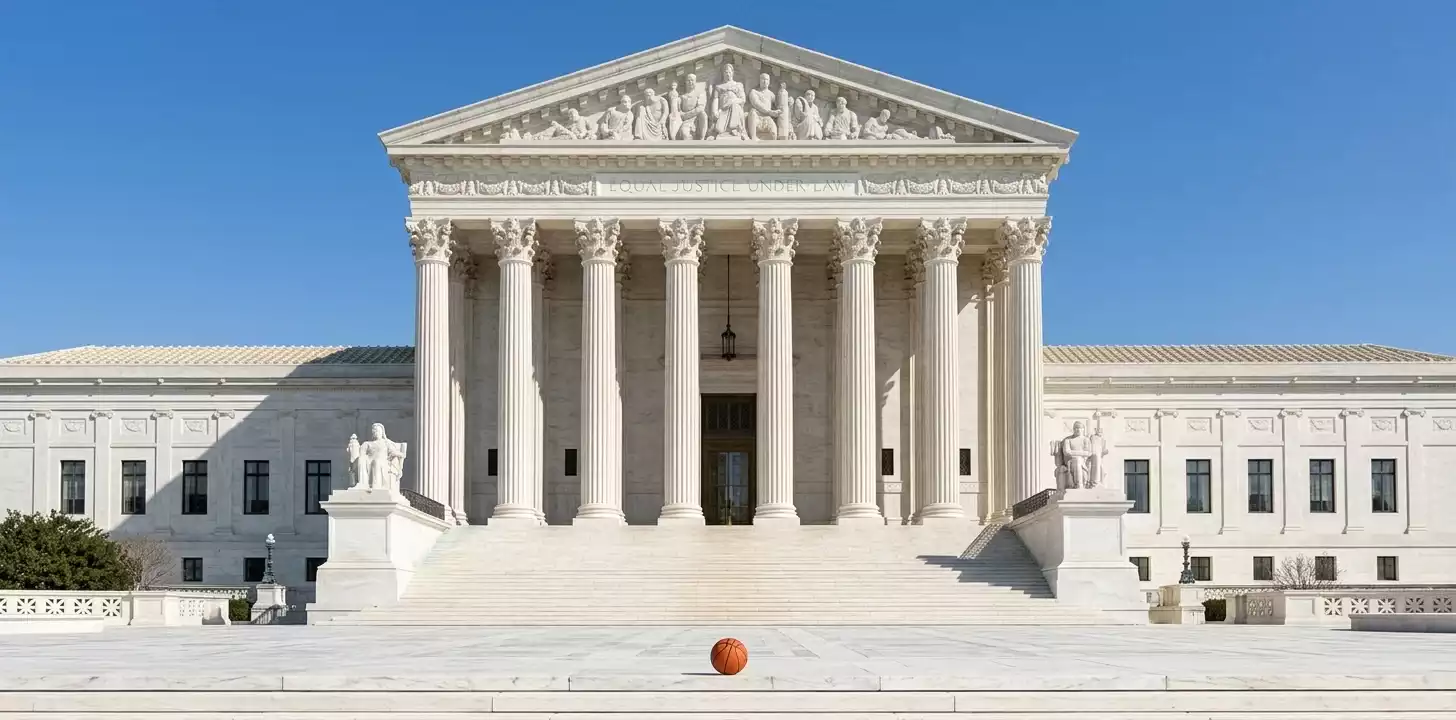
On 14 May 2018, the Supreme Court of the United States struck down the Professional and Amateur Sports Protection Act in a 6-3 decision. The case was Murphy v. National Collegiate Athletic Association, and its immediate effect was narrow: it removed a federal law that had prohibited most states from authorising sports betting. Its broader effect was seismic. Within eight years, 38 states and the District of Columbia legalised sports betting. Americans wagered more than $600 billion through legal channels. An entire industry — worth $166.94 billion in handle during 2025 alone — rose from near nothing to become one of the fastest-growing sectors in the American economy.
And then came the consequences. The 2025 NBA gambling scandal, the 2026 NCAA point-shaving indictment, the surge in integrity alerts across every professional and college sport — none of these events was directly caused by Murphy v. NCAA, but all of them exist within the landscape that the decision created. From nine years of analysing betting integrity, I have come to view the Murphy ruling as the Big Bang of modern American sports betting: a single event that set everything else in motion, including outcomes no one anticipated.
PASPA: The Law That Kept Sports Betting Underground
To understand what Murphy changed, you need to understand what PASPA was. The Professional and Amateur Sports Protection Act, signed into law by President George H.W. Bush in 1992, effectively prohibited sports betting in all but four states — Nevada, Oregon, Delaware, and Montana — that had existing frameworks. New Jersey, which had been exploring legalisation, was granted a one-year window to act but did not exercise it.
PASPA did not make sports betting a federal crime. It worked differently, and the distinction matters: the law prohibited states from “sponsoring, operating, advertising, promoting, licensing, or authorizing” sports betting. It was not a criminal statute directed at bettors but a structural prohibition directed at state governments. Americans who wanted to bet on sports during the PASPA era had two options: travel to Nevada or use illegal channels — offshore websites, local bookmakers, informal networks.
The underground market thrived. Estimates of illegal sports betting volume during the PASPA era ranged from $150 billion to $400 billion annually — dwarfing the legal Nevada market. The irony that advocates for legalisation repeatedly highlighted was that PASPA did not prevent betting; it merely prevented regulated, taxed, monitored betting. The integrity argument for legalisation was that bringing the market into the open would make manipulation harder to hide, because legal operators have compliance obligations that underground bookmakers do not.
The 2018 Decision: What the Court Actually Said
New Jersey challenged PASPA after state voters approved a 2011 referendum authorising sports betting at casinos and racetracks. The state argued that PASPA violated the anticommandeering doctrine of the Tenth Amendment — essentially, that the federal government cannot compel state governments to enforce a federal regulatory scheme. The Supreme Court agreed.
Justice Samuel Alito, writing for the majority, held that PASPA unconstitutionally commandeered state legislatures by preventing them from passing laws to authorise sports betting. The decision did not create a right to gamble or require states to legalise betting. It simply removed the federal obstacle, leaving each state free to make its own policy choice. Since 2018, the cumulative legal sports betting handle in the United States has surpassed $600 billion — a number that captures both the pent-up demand and the commercial velocity that legalisation unleashed.
What the Court did not address — and what the majority opinion barely mentioned — was integrity. The decision contained no framework for monitoring, no requirements for data-sharing between operators and sports leagues, and no federal standards for detecting or preventing manipulation. The Court treated PASPA as a federalism question, not a sports integrity question, and resolved it accordingly. The integrity infrastructure that would eventually prove inadequate was left entirely to state legislatures, sports leagues, and private monitoring firms to build from scratch.
38 States and Counting: The Domino Effect
The speed of state-level adoption after Murphy was extraordinary. Within a year, eight states had launched legal sports betting markets. Within three years, the number exceeded twenty. By 2026, 38 states and the District of Columbia had some form of legal sports betting, with mobile wagering — the format most associated with rapid market growth and problem gambling concerns — available in the majority of those jurisdictions.
The domino effect was driven by two forces. First, competitive pressure: once neighbouring states began collecting tax revenue from sports betting — a total of $3.71 billion nationally in 2025 — holdout states faced political pressure to capture their share. The revenue argument proved politically irresistible, particularly in states facing budget constraints. Second, industry lobbying: sportsbook operators, technology providers, and media companies invested heavily in state-level advocacy, presenting legalisation as a source of revenue, jobs, and consumer protection.
The expansion was geographically uneven but commercially transformative. New York alone generated approximately $1.3 billion in gambling tax revenue during 2025 — more than the next four states combined. The American market went from $166.94 billion in legal handle to becoming, by a substantial margin, the largest regulated sports betting market in the world. For comparison, the United Kingdom’s entire gambling market — including casino, lottery, and online gaming in addition to sports betting — generates roughly a third of the US sports betting handle alone. You may also find NBA Betting Integrity Monitoring: The Systems Designed to Catch Cheaters interesting.
From Legalisation to Scandal: The Direct Line
John Laufer, the former federal prosecutor who worked the Tim Donaghy case, drew a direct line between legalisation and the NBA scandal. He argued that the league “created the conditions for this scandal” by embracing the commercial opportunities of legal betting without adequately addressing the integrity risks that came with them. The observation is not an argument against legalisation — Laufer himself has acknowledged that regulated markets are preferable to underground ones — but a critique of the pace and priorities of implementation.
The direct line runs through several stations. Legalisation enabled the creation of prop bet markets on individual player performance — markets that did not exist at meaningful scale in the PASPA era. Those markets created a new category of manipulation opportunity, because a single player can influence his own statistical output far more easily than he can influence a game’s final score. The NBA encouraged its fan base to engage with those markets through integrated broadcasting and official data partnerships. And the monitoring systems designed to police those markets were built for a smaller, simpler betting landscape that no longer existed.
None of this means Murphy v. NCAA was wrongly decided. The legal reasoning about federalism and the anticommandeering doctrine stands on solid constitutional ground. But the decision’s consequences extend far beyond the legal question it resolved. The 2025 NBA scandal is, in significant part, a product of the regulatory vacuum that the Murphy decision left behind — a vacuum that states, leagues, and operators have filled unevenly, with commercial imperatives consistently outpacing integrity investment. Eight years on, that imbalance is no longer theoretical. It has names, faces, and federal indictments attached to it. Learn more about nba player caught betting on our main page.
What was the PASPA law and why did the Supreme Court strike it down?
The Professional and Amateur Sports Protection Act, enacted in 1992, prohibited most US states from authorising sports betting. It did not criminalise individual betting but prevented state governments from licensing or regulating sports wagering markets. In Murphy v. NCAA (2018), the Supreme Court ruled 6-3 that PASPA violated the Tenth Amendment’s anticommandeering principle by compelling state legislatures to maintain a federal prohibition. The decision removed the federal barrier, allowing each state to decide independently whether to legalise sports betting.
How many US states have legalised sports betting since 2018?
As of 2026, 38 states and the District of Columbia have legalised some form of sports betting, with the majority offering mobile wagering platforms. The pace of adoption accelerated rapidly after the Supreme Court’s Murphy v. NCAA decision in 2018, driven by competitive pressure between neighbouring states and the appeal of gambling tax revenue. The cumulative legal sports betting handle in the US has surpassed $600 billion since legalisation began.
Created by the ”nba Player Caught Betting” editorial team.