NBA Injury Report Manipulation: The Information Edge That Fuels Betting Fraud
 Available in US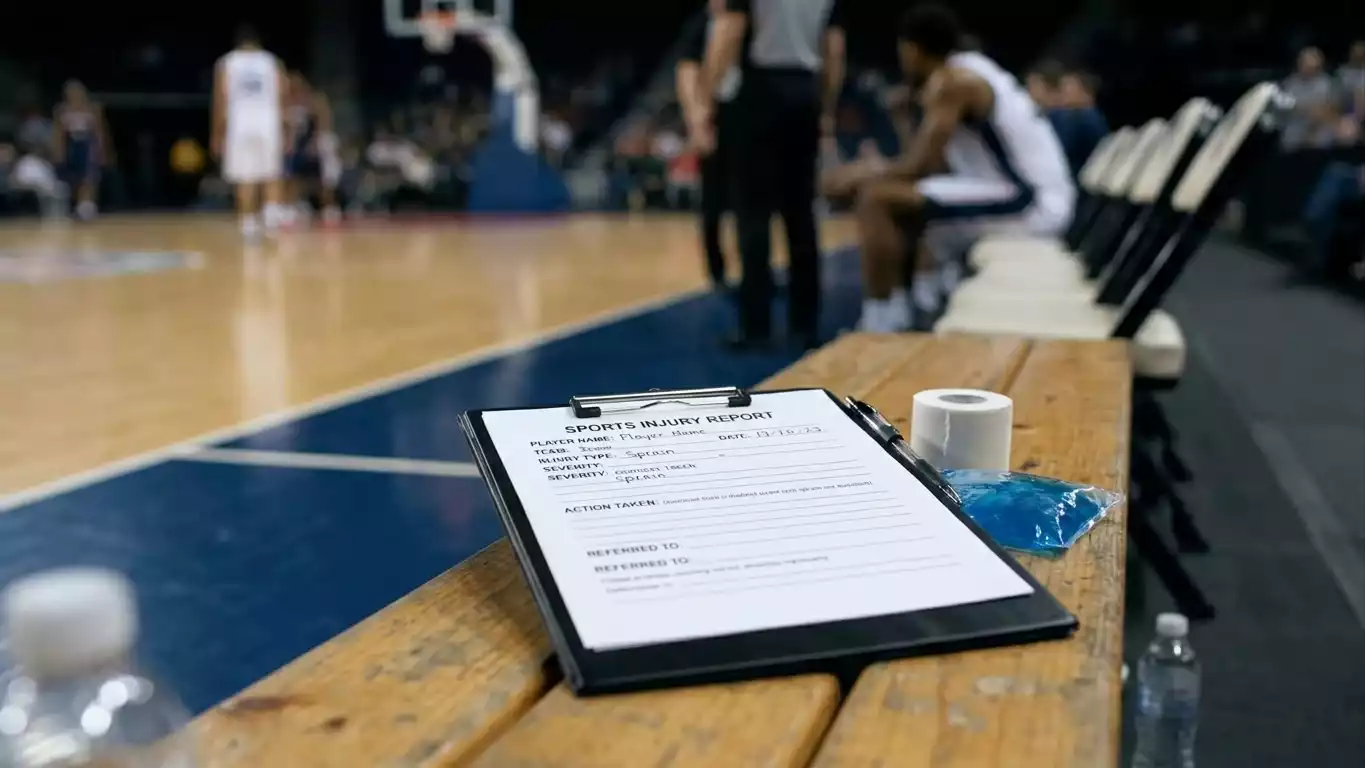
In financial markets, trading on material nonpublic information is called insider trading, and it carries severe criminal penalties. In sports betting, the equivalent — wagering based on injury or lineup information that has not yet been made public — was treated as a grey area for years. The NBA’s decision in late 2025 to require injury report updates every 15 minutes, down from the previous hourly cadence, was an admission that the grey area had been exploited ruthlessly. I have spent my career studying how information asymmetries create betting edges, and the NBA’s injury reporting system was, until recently, one of the most exploitable gaps in professional sport.
The mechanics are simple. The implications are enormous. And the fix, while welcome, is incomplete.
The Window Between Knowing and Reporting
Picture this: it is 4:30 in the afternoon, three hours before tip-off. A starting point guard tweaks his ankle in the shootaround. The team’s medical staff evaluates him, tells the coaching staff he is doubtful, and the head coach adjusts the game plan. At that moment, perhaps thirty people in the organisation know the player’s status. The public — and the betting markets — know nothing.
Under the NBA’s previous reporting rules, that information could remain nonpublic for up to an hour. In the world of sports betting, an hour is an eternity. Player prop lines — points, assists, rebounds, minutes played — are priced on the assumption that a player will play his normal role. When someone knows he will not, every prop bet on that player becomes mispriced. The “under” on his points line becomes a near certainty. The odds have not adjusted because the market has not received the information.
That gap — between the moment an organisation knows and the moment the market knows — is the window through which every injury-related betting manipulation operates. The NBA required injury report updates, but the cadence was too slow. The updates themselves were vague, using categories like “probable,” “questionable,” and “doubtful” that conveyed direction without precision. And crucially, the system relied on voluntary compliance from teams that had no financial incentive to disclose information faster than the rules required.
The result was a system that functioned more as a formality than a safeguard. Insiders who wanted to exploit the gap had ample time, and the penalty for slow reporting — at the team level — was negligible. The information flowed not through elaborate spy networks but through the most mundane channels imaginable: text messages between friends, phone calls between former teammates, casual conversations at pregame meals. The system’s vulnerability was not technical. It was human.
How Injury Data Was Used in the Porter and Rozier Schemes
Jontay Porter’s manipulation was the most direct version of injury-based betting fraud possible. He did not merely share information about his health — he manufactured it. Porter knew he would leave games early because he was the one making the decision to leave. He faked or exaggerated symptoms, reducing his own statistical output to ensure that “under” bets on his performance would pay off. His 13 bets, totalling $54,094, were placed through an associate’s account, generating $76,059 in returns.
The Porter scheme was crude but effective. He controlled both sides of the equation: the information and the action. His manipulation was detectable precisely because it was so blatant — a player consistently underperforming his statistical baseline in games where suspicious betting activity was concentrated. U.S. Integrity flagged the pattern. DraftKings independently identified irregular wagering on Porter’s props. The convergence of those signals made the case relatively straightforward to build.
The Rozier situation operated on a different model. The federal indictment alleges that Rozier shared nonpublic information with associates who placed bets, rather than betting directly himself. The $263,000 in suspicious prop bet wagering on a single March 2023 game — flagged by U.S. Integrity in real time — involved information about Rozier’s expected minutes, his physical condition, and his likely role in the game plan. Rozier did not need to manipulate his own performance for the scheme to work. He simply needed to share what he already knew.
That distinction matters. Porter’s scheme required visible, detectable changes in his on-court behaviour. Rozier’s scheme, if the allegations are proven, required only a conversation. The information edge existed the moment Rozier knew something the market did not. The manipulation of prop bet markets becomes almost trivially easy when the person with the information is the player himself.
The 15-Minute Rule: NBA’s Attempt to Close the Gap
The reform, announced in December 2025, was simple in concept: NBA teams must now update their public injury reports every 15 minutes on game days, rather than every hour. That four-fold increase in reporting frequency was the most concrete operational change to emerge from the scandal.
Fifteen minutes is a meaningful improvement. It compresses the window during which leaked information retains its betting value, reducing the time available for associates to place bets before the market adjusts. In practical terms, a tipster who relays a player’s status change now has fifteen minutes — at most — before the information becomes public and the odds move. That is a narrow window, especially when placing large bets across multiple platforms, each of which has its own verification and settlement processes.
But the rule has limitations that are worth acknowledging honestly. First, it applies to game-day reporting only. Information about a player’s health gathered during practice, treatment, or informal settings during the week is not subject to the same frequency requirement. A player who suffers an injury on Thursday and is likely to miss Sunday’s game generates nonpublic information that may circulate for days before appearing on any official report.
Second, the 15-minute rule addresses the timing of disclosure, not its content. Teams are still permitted to use imprecise categories, and there is no requirement to disclose the specific nature of an injury, the results of imaging, or the player’s own assessment of his readiness. The NBA’s own memo acknowledged that proposition bets on individual player performance involve heightened integrity concerns — but stopping short of mandating the level of disclosure that would genuinely level the playing field between insiders and the betting public. Check out our guide on NBA Insider Information and Betting: How Leaked Tips Become Federal Charges as well.
What This Means for Anyone Betting on NBA Player Props
If you are placing bets on NBA player markets from the UK — and the size of the transatlantic NBA betting market suggests many of you are — the injury reporting landscape should factor directly into your decision-making.
The 15-minute rule reduces but does not eliminate the information gap. Prices on player props will adjust faster to reported changes, which means the market will be more efficient close to tip-off than it was previously. But the gap between what insiders know and what the public knows will never be zero. Medical information, coaching decisions, and player availability are inherently private until disclosed, and no reporting rule can fully close that asymmetry.
The practical implication for bettors is straightforward: approach early-posted player prop lines with appropriate scepticism. Lines set hours before a game carry the greatest risk of being priced on outdated information. Lines that move sharply in the final minutes before tip-off may reflect legitimate market adjustments — or they may reflect information flow from insiders to connected bettors. Either way, the bettor who wagers without checking the latest injury updates is at a structural disadvantage.
The deeper implication is philosophical. The 2025 scandal demonstrated that the NBA’s injury reporting system was, for years, a source of profitable nonpublic information for anyone with the right connections. The reforms are real but incremental. The fundamental tension — between the league’s interest in controlling its own narrative and the betting market’s need for timely, accurate information — has not been resolved. It has merely been compressed into a smaller window. Discover everything about nba player caught betting here.
How often must NBA teams update their injury reports?
As of December 2025, NBA teams are required to update their public injury reports every 15 minutes on game days. This represents a significant increase from the previous requirement of approximately hourly updates. The change was implemented in direct response to the 2025 betting scandal, which exposed how the longer reporting window allowed insiders to exploit nonpublic injury information for betting advantages.
Can bettors tell when injury report information has been leaked early?
Indirect signs include sudden, sharp movements in player prop lines without a corresponding public report, concentrated betting volume on ‘under’ lines for a specific player, or multiple accounts placing similar wagers within a short timeframe. However, these patterns can also reflect legitimate sharp betting based on publicly available signals. Only integrity monitoring firms with access to aggregated sportsbook data can reliably identify patterns consistent with insider information exploitation.
Created by the ”nba Player Caught Betting” editorial team.