Basketball Betting Scandals Through the Decades: What History Keeps Repeating
 Available in US
Every time a new basketball gambling scandal breaks, someone calls it unprecedented. They are always wrong. I have spent years tracing the lineage of corruption in basketball, and the pattern is so consistent it borders on parody: insiders exploit information advantages, outsiders provide the financial infrastructure, the league reacts with reforms that hold until the next scandal proves them insufficient, and the cycle restarts.
The 2025 NBA arrests — 34 people, including current and former players and coaches — shocked the public. They should not have. The blueprint was laid in 1951, refined in 2007, and updated in 2024. Each iteration involved the same fundamental ingredients: access to nonpublic information, a financial incentive to exploit it, and a regulatory environment that moved slower than the people it was meant to police. What follows is a history not of isolated incidents but of a recurring structural failure.
1951 CCNY and the Birth of Point-Shaving
Before the NBA was the NBA, college basketball was America’s premier basketball product, and the game’s first major gambling crisis struck at its commercial peak.
The City College of New York had just completed one of the most extraordinary achievements in basketball history — winning both the NIT and NCAA tournaments in the same season, a double that is no longer even possible under current tournament structures. Then the arrests came. Players from CCNY, along with colleagues from Long Island University, Bradley, Toledo, and Kentucky, were caught shaving points — deliberately keeping the margin of victory within a range that favoured gamblers — in exchange for payments from organised crime figures.
The 1951 scandal destroyed careers and programs. CCNY dropped from Division I athletics entirely. Several players received criminal convictions. And the public reaction was identical to what we hear in 2026: How could this happen? How long had it been going on? Can we trust what we are watching?
What the 1951 scandal established, and what every subsequent scandal has confirmed, is the basic equation that makes basketball uniquely vulnerable. Unlike football or baseball, where multiple players must coordinate to affect outcomes, basketball’s small roster size means that a single compromised individual — especially a point guard or a starting centre — can meaningfully influence both game results and individual statistical outcomes. That structural reality has not changed in seventy-five years, and no amount of regulation has eliminated the incentive it creates.
Tim Donaghy: When a Referee Bet on His Own Games
If CCNY was the origin story, Tim Donaghy was the nightmare scenario — a serving NBA referee who bet on games he was officiating, using his own decisions to influence outcomes.
I have studied the Donaghy case in detail, and what strikes me most is not the corruption itself but the NBA’s response to it. The league initially treated Donaghy as a lone actor, a rogue official whose behaviour reflected personal failings rather than systemic vulnerabilities. That framing was convenient but incomplete. The former federal prosecutor who handled the case, John Laufer, later offered a far more uncomfortable assessment: the league created the conditions for this scandal by turning every play into a financial product and every player into an investment vehicle.
Donaghy’s scheme, which operated from at least 2003 to 2007, exploited the same information asymmetry that defines the 2025 scandal. He had knowledge that bettors did not — his own foul-calling tendencies, his awareness of how other officials would handle specific matchups, his understanding of how NBA games were actually managed behind the scenes. That knowledge was worth money to anyone willing to bet on it.
The NBA’s reforms after Donaghy focused primarily on referee oversight: enhanced monitoring of officials’ betting activities, more rigorous background checks, and increased analysis of officiating patterns. Those reforms were sensible and, by most accounts, effective at deterring future referee corruption. But they did nothing to address the broader principle that Laufer identified — that the NBA had created a product rich in exploitable information without adequately protecting the channels through which that information flowed. The Jontay Porter case in 2024 proved that the same vulnerability simply migrated from referees to players.
Murphy v. NCAA and the Legalisation Explosion
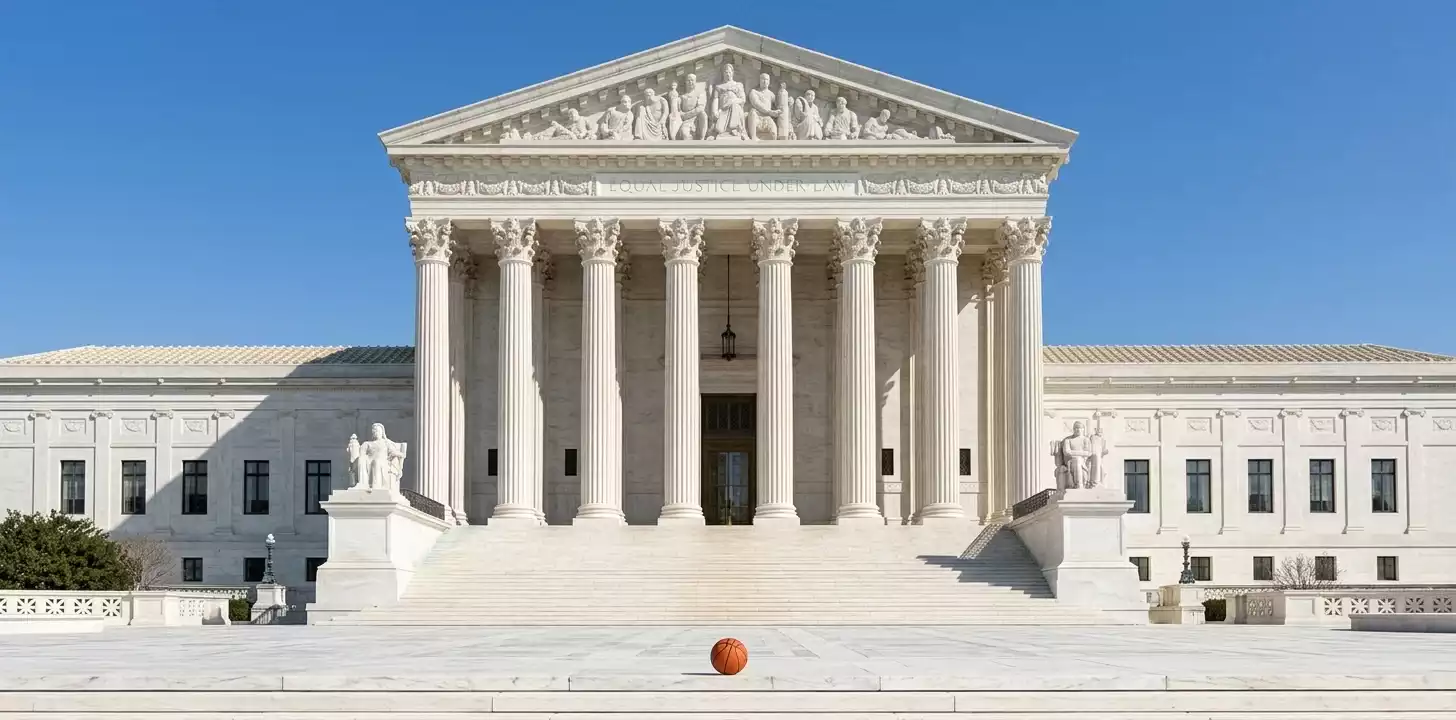
The 2018 Supreme Court decision in Murphy v. NCAA did not cause the 2025 scandal. But it created the market conditions that made it possible on a scale previously unimaginable.
Before Murphy, legal sports betting in the United States was confined essentially to Nevada. The cumulative legal handle — the total amount wagered through licensed operators — was modest by global standards. After Murphy struck down the Professional and Amateur Sports Protection Act, states raced to legalise, and the market expanded at a velocity that caught everyone, including the leagues, off guard. Since 2018, the cumulative legal handle in the US has exceeded $600 billion. Thirty-eight states and the District of Columbia now permit some form of legal sports betting.
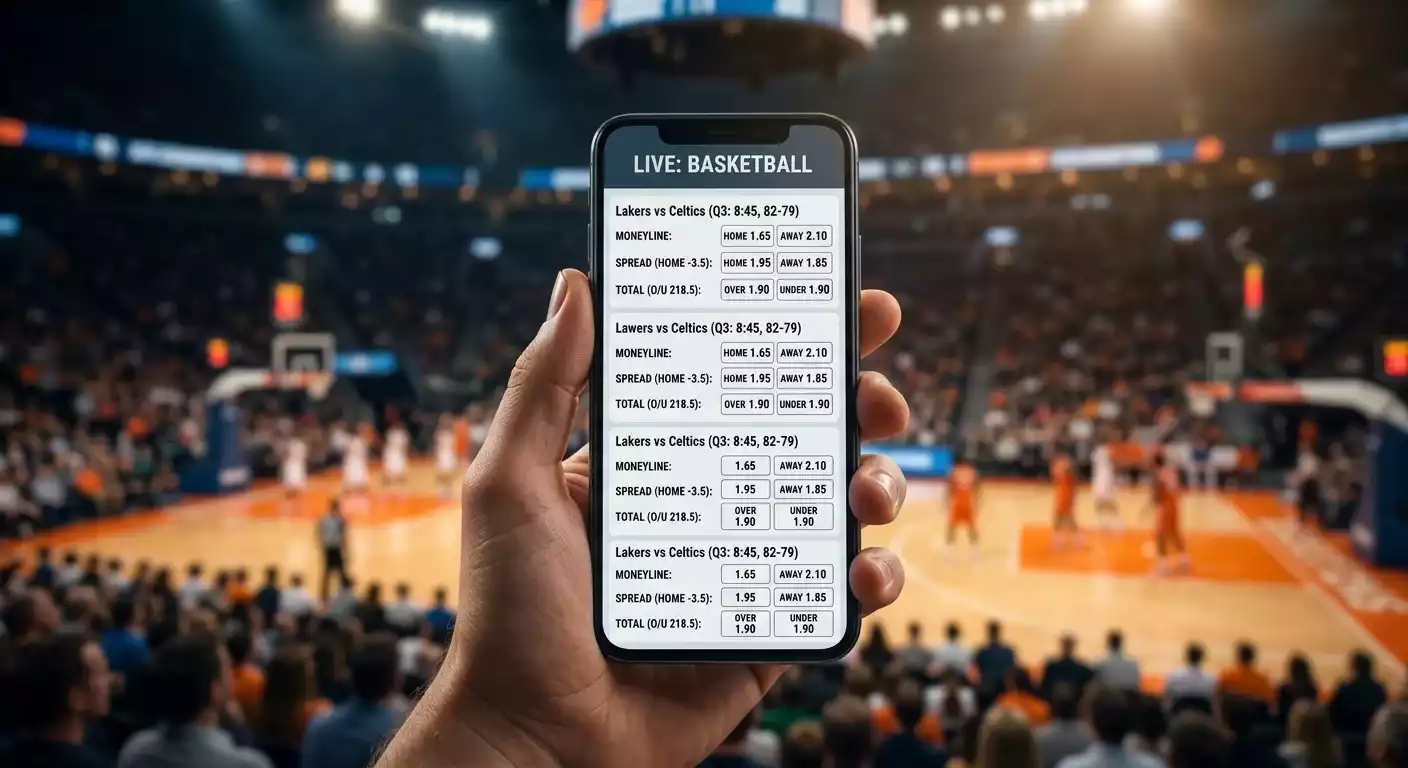
The explosion in legal betting created three conditions that directly enabled the 2025 scandal. First, it massively expanded the range of available betting markets, including player prop bets on individual statistical performance — the specific market type that Porter and Rozier’s associates exploited. Second, it normalised sports betting in American culture, removing the social stigma that had historically served as an informal deterrent. Third, it created a financial ecosystem in which the NBA and other leagues became direct beneficiaries of betting revenue, complicating their ability to act as neutral regulators of the activity.
The irony is that PASPA was designed to prevent exactly the kind of scandal that followed its repeal. The law was imperfect and paternalistic, and its repeal was constitutionally sound. But the absence of a coherent federal framework to replace it left integrity enforcement to a fragmented patchwork of state regulators, private monitoring firms, and league security departments — none of which were prepared for the scale of the market they now oversee. Check out our guide on Sports Betting Tax Revenue Across US States: Who Profits From the $3.7 Billion Windfall as well.
The Patterns That Connect Every Basketball Betting Scandal
Seventy-five years. Four major scandals. One repeating pattern.
The first element is always an information advantage. In 1951, players knew when they intended to underperform. In 2007, Donaghy knew how he would officiate. In 2024, Porter knew he would leave games early. In 2025, insiders shared injury and lineup information before it became public. The specific type of information changes; the structural advantage does not.
The second element is always a financial intermediary. Point-shavers in 1951 worked with organised crime bookmakers. Donaghy worked with a childhood friend connected to the Gambino family. The 2025 defendants worked with a network that included La Cosa Nostra associates. The October arrests produced 34 defendants precisely because modern betting schemes require infrastructure — multiple accounts, layered transactions, money laundering channels — that extends far beyond the individuals with access to the sport.
The third element is always an institutional failure of imagination. The NBA after Donaghy reformed referee oversight but did not anticipate that the same vulnerability existed among players. The NBA after Porter implemented the lifetime ban but did not anticipate that the culture enabling manipulation extended to coaching staffs and organised crime networks. Each reform addresses the last scandal rather than the next one.
And the fourth element, the one I find most frustrating after years in this field, is the post-scandal amnesia. Within two or three seasons, the urgency fades. Reforms become routine. Monitoring budgets plateau. The cultural memory of the scandal weakens. And the conditions for the next crisis reassemble quietly, in the same locker rooms and on the same team flights, until someone with access and incentive crosses the line again. Discover everything about nba player caught betting here.
How many major gambling scandals has the NBA had in its history?
Professional and college basketball have experienced four major gambling scandals: the 1951 CCNY point-shaving case involving multiple college programmes, the Tim Donaghy referee scandal uncovered in 2007, the Jontay Porter case resulting in a lifetime ban in 2024, and the 2025 arrests involving 34 people including current and former NBA players and coaches. Each scandal revealed different facets of the same structural vulnerability.
What parallels exist between the Tim Donaghy scandal and the 2025 case?
Both scandals involved insiders exploiting nonpublic information for betting advantages, both had connections to organised crime networks, and both exposed gaps in the NBA’s self-regulatory model. The key difference is scope: Donaghy was a single referee acting largely on his own, while the 2025 case involved a coordinated network of players, coaches, and associates operating across multiple games over a period of years.
Prepared by the nba Player Caught Betting editorial staff.