NBA Betting Scandal and Fan Trust: How the Integrity Crisis Threatens Basketball’s Future
 Available in US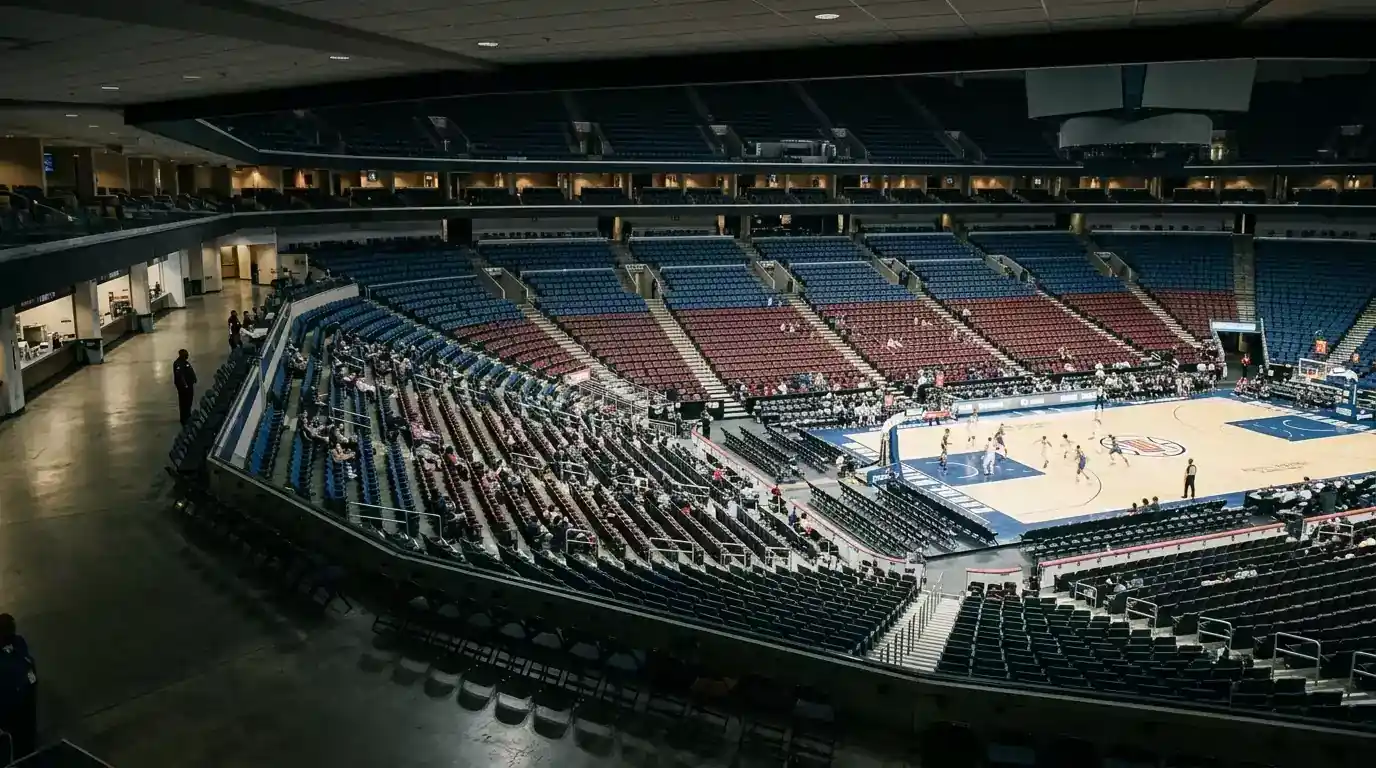
Michael Lewis put it plainly: leagues “are going to poison their sports if they don’t watch out.” The sports commentator was speaking to CNN Business days after the October 2025 arrests, and his assessment carried a warning that has since become harder to dismiss. “We’re not at the place where people are genuinely questioning the integrity of the sport,” Lewis said. “But we’re not that far away.” That gap — between where public trust is now and the tipping point where it collapses — is the most consequential distance in professional basketball.
As someone who has spent nine years analysing betting integrity across professional sport, I can tell you that fan trust is not a metric you can chart the way you chart revenues or franchise values. It is a reservoir that fills slowly through years of genuine competition and drains quickly when scandals emerge. The 2025 NBA gambling scandal has opened a drain, and the question now is how fast it flows and whether the league can repair it before the damage becomes structural.
“Not That Far Away”: The Tipping Point for Fan Confidence
Lewis’s observation captures something that raw data struggles to measure: the psychological shift that occurs when casual doubt becomes persistent suspicion. Before the October 2025 arrests, most NBA fans watched games with the baseline assumption that what they were seeing was genuine. A player having a poor night was just a player having a poor night. A close game decided by a late turnover was just basketball. That assumption is the invisible infrastructure upon which everything else — ticket sales, television ratings, merchandise revenue, betting volume — is built.
After the arrests, a subset of fans began interpreting the same events through a different lens. A player leaving a game early with a minor injury prompts whispered questions. A star player’s uncharacteristically poor performance generates social media speculation. An unexpected blowout in a game with heavy betting volume draws conspiracy theories. None of these reactions may be justified in any specific case, but their aggregate effect erodes the trust environment that professional sport requires.
Senators Ted Cruz and Maria Cantwell identified this dynamic in their bipartisan letter to Adam Silver, writing that “sports betting scandals like this one may lead the American public to assume that all sports are corrupt.” The phrase “all sports” is significant — it suggests that the damage from an NBA scandal does not stay contained within basketball. It radiates outward, contaminating public perceptions of professional sport as a whole. For a media ecosystem that has invested tens of billions of dollars in live sports broadcasting, that radiation represents an existential commercial threat.
Are Fans Actually Turning Away? Early Indicators
The honest answer is: it is too early to tell, and the data is ambiguous. NBA projected revenue for the 2025-26 season is $14.3 billion, a 12% increase over the prior year, driven primarily by the new media deal rather than by ticket sales or merchandise. Television ratings for the early portion of the season showed modest growth in some markets and modest decline in others, consistent with normal year-to-year variance rather than a scandal-driven exodus.
Arena attendance has remained stable, though arena-level data is notoriously hard to interpret because teams routinely report tickets sold rather than actual attendance, and sold-out arenas can mask secondary-market price declines. Social media engagement around NBA content has, if anything, increased since the scandal — but much of that increase reflects interest in the scandal itself rather than in basketball competition.
The more revealing metric may be betting volume. If fans are losing trust in NBA game integrity, the most direct financial signal would be a decline in betting handle on NBA markets. Early indications from Q4 2025 suggest that NBA betting volume held steady or grew modestly, which could indicate that the scandal has not yet affected bettor confidence — or could indicate that bettors are drawn to markets they perceive as potentially manipulated, hoping to identify and exploit the next anomaly. Either interpretation is troubling in its own way.
UK and European NBA Fans: A Different Perspective on Integrity
For British and European NBA fans, the scandal lands in a cultural context where match-fixing is not an abstract threat but a recurring reality. European football has dealt with systematic fixing in lower leagues, tennis has confronted manipulation at the challenger level, and cricket’s spot-fixing scandals have become reference cases for integrity analysts worldwide. European sports fans, in other words, are more familiar with the concept of corrupted competition than their American counterparts — and potentially more resilient to the shock of a single scandal.
That familiarity cuts both ways. British punters who bet on NBA markets through licensed UK bookmakers may approach the scandal with greater scepticism but also greater fatalism. If your experience of sport includes the knowledge that some competitions in some sports are corrupted, the NBA scandal confirms a pre-existing worldview rather than shattering a naive assumption. The practical response may be not to stop betting but to bet differently — avoiding player props, reducing exposure to lower-profile games, focusing on markets less susceptible to individual manipulation.
The NBA’s global growth strategy depends heavily on expanding its European and Asian fan bases. A scandal that reinforces European perceptions of American sport as commercially driven and insufficiently regulated could slow that expansion at a critical moment. The league’s international streaming partnerships, merchandise sales, and game-staging in European cities all depend on the perception that the NBA is a premium product worth consuming. A product tainted by gambling corruption is harder to market as premium, particularly to audiences with direct experience of how corruption degrades a sport’s appeal. Read our detailed review of NBA Betting Scandal Legal Timeline: Every Key Date From Arrest to Trial.
What It Would Take to Restore Confidence in NBA Competition
Trust restoration after an integrity scandal follows a predictable but demanding pattern. The first requirement is transparency — the league must be seen to confront the problem fully rather than minimise it. Silver’s early statements, including his admission that he was “deeply disturbed” and had a “pit in my stomach,” were a reasonable start, but transparency must extend beyond emotional reactions to structural disclosure: what failed, why it failed, and what is being changed.
The second requirement is demonstrable reform. The NBA’s decision to require injury report updates every 15 minutes was a concrete step, but it addresses only one vector of the manipulation problem. More ambitious reforms — restructuring two-way contracts to reduce financial vulnerability, restricting or redesigning player prop markets, increasing investment in proprietary integrity monitoring systems, and creating structural separation between the league’s commercial and integrity functions — would signal that the NBA is treating the scandal as a systemic failure rather than a collection of individual bad actors.
The third requirement is time. Fan trust, once damaged, does not recover with a single press conference or a rule change. It recovers through the accumulation of clean seasons, transparent investigations, and visible consequences for violations. The NFL’s concussion crisis and MLB’s steroid era both required years of sustained effort before public confidence stabilised. The NBA should expect a similarly extended recovery — and should plan its integrity investments accordingly, not as short-term crisis management but as a permanent cost of operating in a legalised betting environment. Find the best options for nba player caught betting.
Has the 2025 scandal affected NBA viewership or attendance?
Early indicators are ambiguous. NBA projected revenue for 2025-26 is $14.3 billion, up 12% from the prior year, though this increase is driven primarily by the new media deal rather than organic attendance or viewership growth. Television ratings have shown mixed results, with modest gains in some markets and modest declines in others. Arena attendance has remained stable by reported figures. It remains too early to determine whether the scandal will produce a sustained decline in fan engagement, as the full effects of integrity crises typically emerge over multiple seasons.
What steps could restore fan trust in NBA game integrity?
Trust restoration requires three elements. First, transparency: the league must disclose what integrity failures occurred, why monitoring systems missed the manipulation, and what structural vulnerabilities remain. Second, demonstrable reform: concrete changes such as the 15-minute injury report rule, potential restrictions on player prop markets, increased investment in proprietary monitoring systems, and structural separation between the league’s commercial and integrity functions. Third, time: fan confidence recovers through accumulated seasons of clean competition and visible consequences for violations, not through individual announcements or rule changes.
Written by the editors at nba Player Caught Betting.